
Collaborators
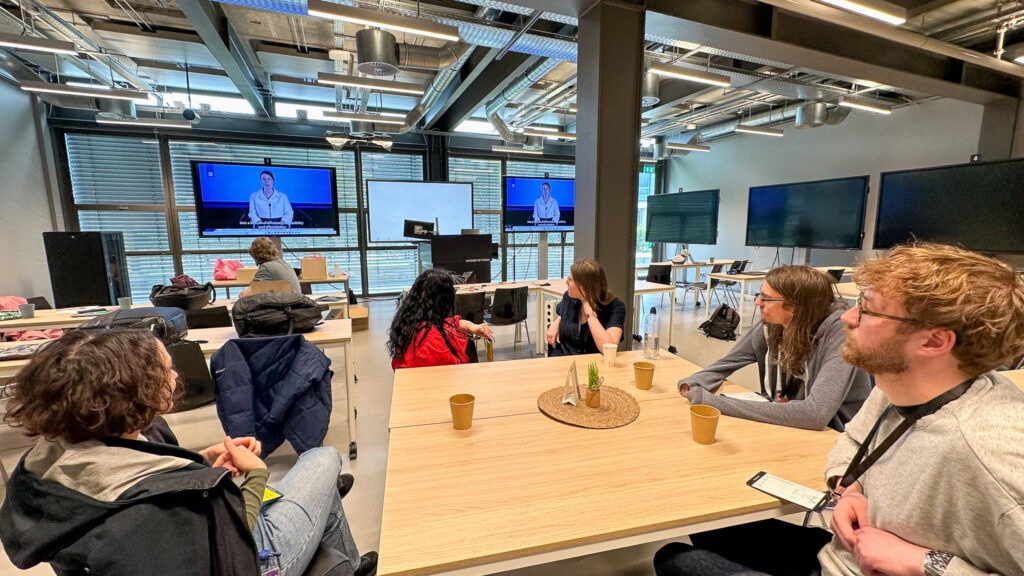
We worked on this assignment with Maurits Dijkman, Bianca Filip, Ewoud Janus, Emilia Pavel, Aryan Bansal and myself of course. The picture in Figure 1 was taken by Maurits Dijkman. During this session we were mostly participants in the EduLarp, I acted out my assigned character to the best of my ability. I also worked on large parts of the worksheet we got, but once again in a group setting and effort.
Visualisation
Structured Observation
During this session we participated in an organized EduLARP scenario. We were given different characters and associating character cards to explain to us who we were and how our characters should act. This session was a very much shortened version of the full EduLARP role-play which would have taken hours. After getting the different aspects of the session explained to us, we were made to walk around the room for a few minutes. During this time we were given some instructions to help us get comfortable and into a character.
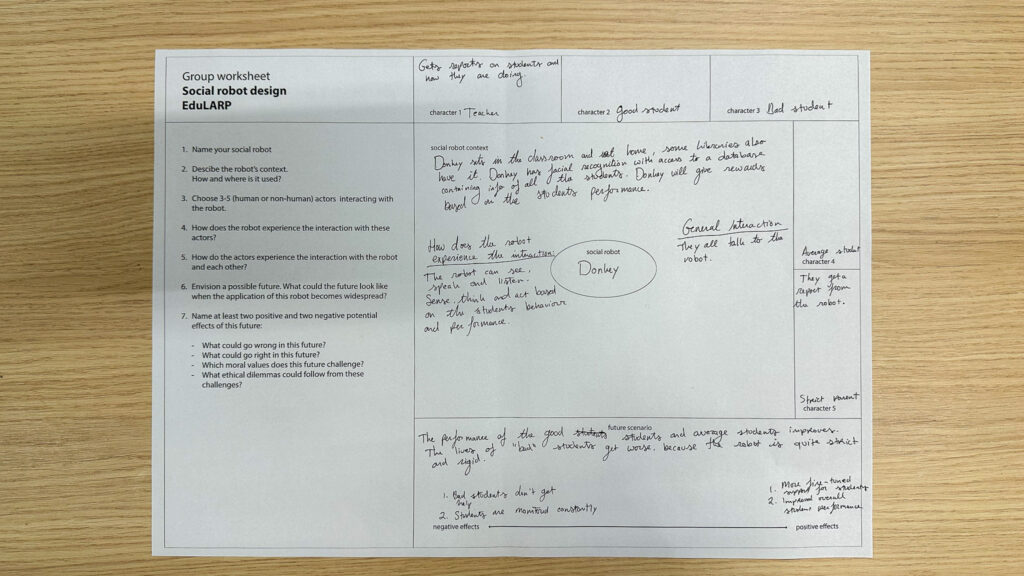
In Figure 1 you can see us during the first scenario, were halfway through the role-play we got to see a fictive news reel giving us more context for the scenario. After the first scenario we were tasked to fill out a worksheet. This worksheet can be seen in Figure 2, this worksheet was used to prepare the second scenario that we were partly supposed to design ourselves.
The second scenario was about a socially assitive robot that was given a birthday party. During this birthday party we were supposed to act according to the characters we created in a group format. The way that the second session was setup it was harder to get into character, as the characters we created were not as strongly rounded out or support. You had to do a lot of improvisation to figure out how your character would act. Also due to the fact that the session was going on reasonably long we were all a bit tired. Therefore exposing the more nuanced ethical implications was more difficult. Therefore we found some simple ethical issues with a robot that is in a middle school class watching students and rewarding or punishing them based on their performance. We found that implications such as the robot of course watching young children and the data security issues that come with this.
Reflection - Applicability and HRI grounding
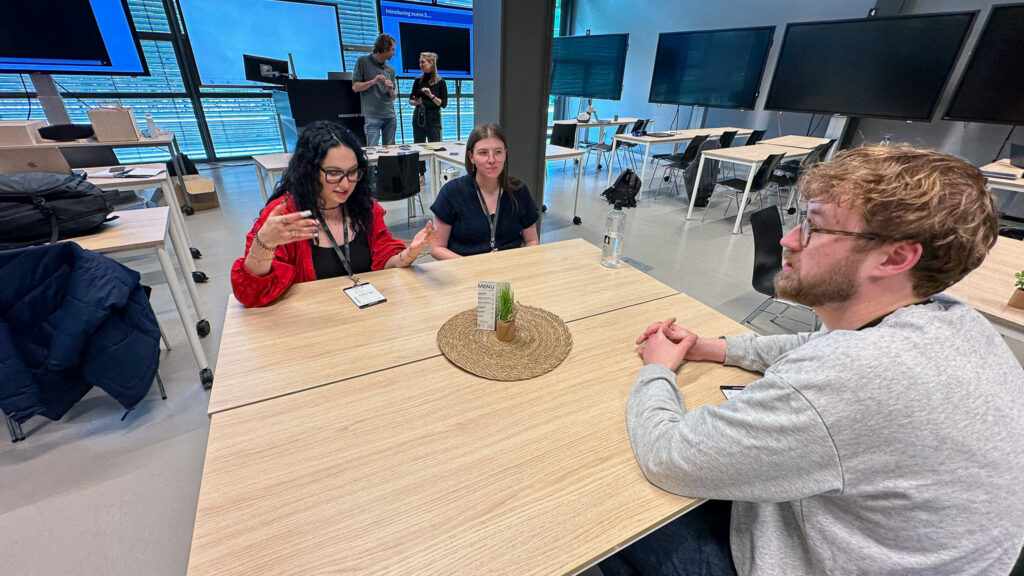
I do believe this method can find some interesting ethical implications, I think that in this setting it did not live up to its entire potential. I think the more critical ethical were not exposed as much as possible, people did not seem fully comfortable becoming their character, which made the interactions forced. I also personally found that getting into a character that had the opposite opinions to my own was difficult. When one would have more time to transition from theirselves to the character they were supposed to play it would have been better.
The ethical implication that I personally discovered and found interesting was that of the robot most likely not adapting to the children's needs. Currently a lot of the school system is focused on neurotypical students, and on standardized testing methods. Which disregards the needs of neurodivergent students who might be better suited to different teaching and testing methods. So if the robot would only take the performance on tests and such into account a neurodivergent student might fall into the cracks. Where they will be classified as a poorly performing student even though they are very capable in the right setting and context. This is also explored in the work of Sharkey, were they performed an ethical analysis on robot teachers. They found that such systems would put the students at risk of continuous surveillance while removing the empathy which is required for effective teaching. Secondly, these systems would inherently reflect the biases of their creators, and provide a system that is typically optimized for neurotypical students.
Although the EduLarp session focused on an educational setting, the ethical considerations that were brought up of surveillance, data privacy, and standardization still apply to our toolkit. As our toolkit requires cameras and a microphone to detect the anxiety within the pet. Which introduces privacy risks for the owner. Therefore, we should take into consideration who stores and processes the data, and how can this be done safely. On the topic for standardization we should make sure that the robot is trained on a diverse set of users and does not just work for the "typical" pet.
References
A. J. C. Sharkey, “Should we welcome robot teachers?,” Ethics and Information Technology, vol. 18, no. 4, pp. 283–297, Feb. 2016, doi: 10.1007/s10676-016-9387-z. Available: https://doi.org/10.1007/s10676-016-9387-z

No Comments.